A workable body
Not a flexible or pain-free one. We practice on chairs, benches, and cushions and help you adapt posture to the body you have.
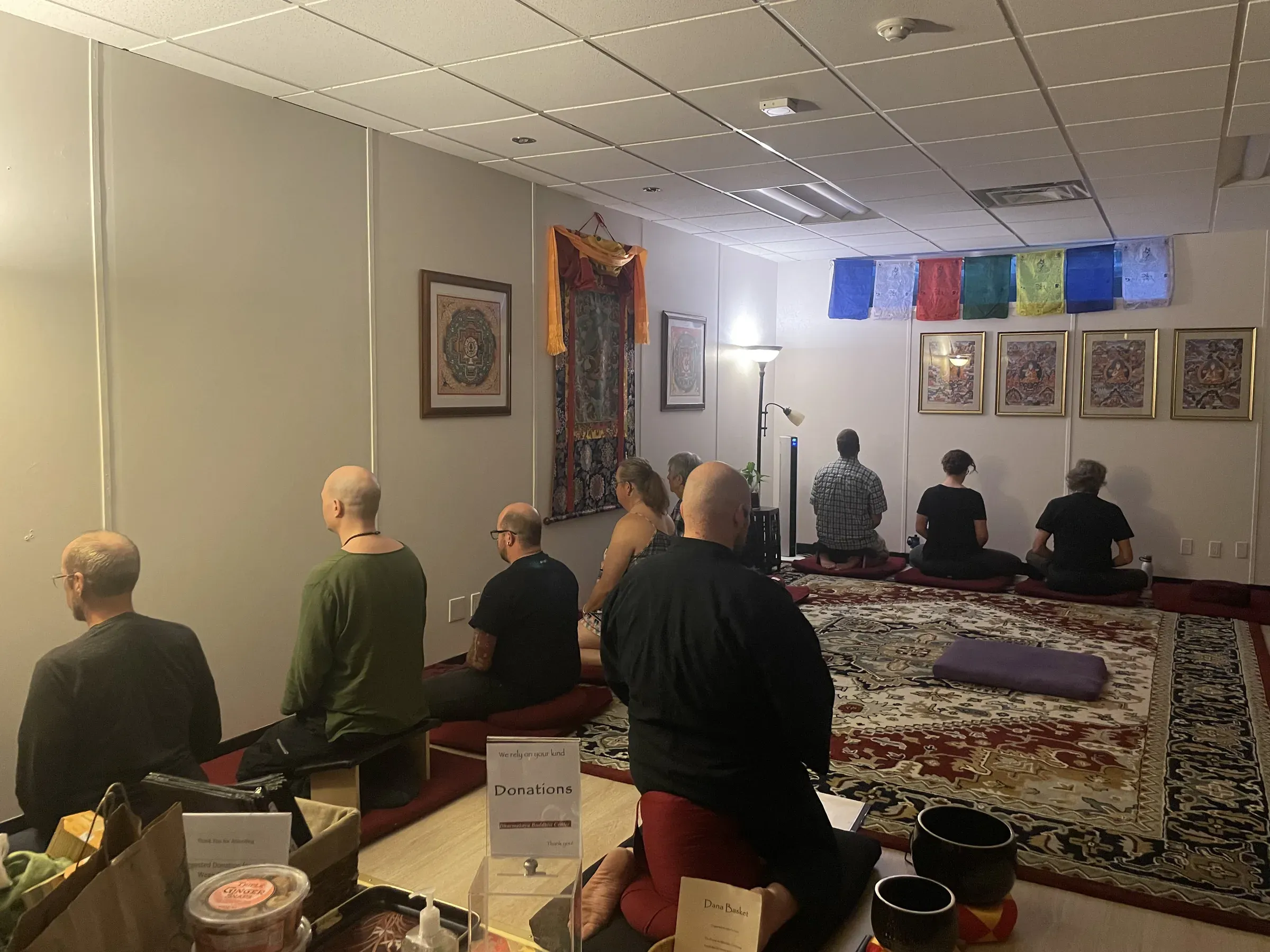

First steps · Reno
A practical introduction to Zen meditation and forms
Beginner’s Night is a relaxed, hands-on introduction to the basic shape of Zen practice. We explain the things that can otherwise feel mysterious—where to sit, how to hold the body, why people bow, what happens during chanting, and what to do when you are unsure.
This is not a test, an initiation, or a sales pitch. It is a chance to try the practice, meet a few people, and ask the questions that may be standing between curiosity and actually entering a zendo.
Informal by design
We learn the forms by trying them together, pausing, asking questions, and trying again. There is no expectation that you will remember everything after one evening.
Priests and practice leaders wear samue, traditional work clothing, rather than formal robes or rakusus. The Zen tradition is present, but the atmosphere is conversational, practical, and intentionally low-pressure.
The evening moves from explanation into direct experience. The order may shift slightly depending on the group and its questions, but the basic arc remains the same.
01
We begin with brief introductions: who we are, what Facing the Mountain does, and a plain-language orientation to Zen practice.
02
Together we walk through entering the room, choosing a cushion or chair, approaching a seat, bowing, and settling into place. Nothing is assumed, and there is time to try each step.
03
We explore stable, workable sitting postures and the basics of zazen. Chairs, benches, and cushions are all valid ways to practice.
04
We look at gassho, standing bows, and full bows; what bowing expresses; and how chanting and service function within Zen practice. You may participate or simply observe.
05
We make room for the questions people often carry quietly: enlightenment, religion, pain, doubt, ritual, home practice, and anything else that would help you understand what we do.
06
The evening closes with a short period of zazen—usually 15 to 20 minutes—and a brief chant so you can experience the basic rhythm of practice.
Not a flexible or pain-free one. We practice on chairs, benches, and cushions and help you adapt posture to the body you have.
Choose clothing that lets you sit and move without distraction. No robes, special equipment, or meditation costume are needed.
You do not need certainty, spiritual ambition, or the right answers. Bring the questions and concerns you actually have.
No. Beginner’s Night is designed for people encountering meditation or Zen for the first time, as well as people who have meditated elsewhere but are new to our forms. We begin from the beginning and do not expect you to know the vocabulary, chants, or etiquette.
No. You do not need to identify as Buddhist or set aside another religious tradition to visit. We practice explicitly within the Sōtō Zen Buddhist tradition, and we are glad to explain what that means without asking you to adopt beliefs before you have had a chance to practice and ask questions.
Chairs, meditation benches, zafus, and zabutons are available. We will help you find a posture that is stable and workable for your body. Enduring avoidable pain is not the point of zazen, and you are always free to adjust your position.
No one will force you to perform a form that you are not ready to try. We explain what the forms mean in our practice and invite you to learn them with us. You may also watch, listen, or ask more questions. Bowing is not directed toward the personal authority of a priest or teacher.
Wear comfortable, modest clothing that allows you to sit and move easily. There is no need to dress formally or buy meditation clothing. Priests and practice leaders usually wear samue—simple Zen work clothes—rather than formal robes on Beginner’s Night.
The building entrance is secured, so please contact us before attending. We will send the current door code and directions to the lower-level practice room. Knowing that you are coming also helps us have enough people and equipment ready to welcome you.
Use the door code you received, come downstairs quietly, and enter at a natural pause in the instruction. Because the evening is interactive, you can usually join without disrupting a silent sitting period. Let us know in advance when possible, especially if you expect to arrive substantially late.
There is no enrollment or obligation. Many people next attend Tuesday zazenkai, where the same forms are practiced with less explanation and longer periods of silence. You are also welcome to return to another Beginner’s Night before taking that step.
Your first visit
We will send the current building door code, confirm the next date, and make sure someone is ready to welcome you downstairs. Briefly tell us what brings you to Zen or what would help you feel prepared.
After the introduction
Beginner’s Night gives you enough orientation to enter our weekly practice without needing to decode everything at once. Come when you are ready; there is no deadline and no expectation that one introductory evening settles every question.
Learn about Tuesday zazenkai