01
Realistic
Commitments are shaped around the body, household, livelihood, and responsibilities actually present—not an imagined life with no demands.
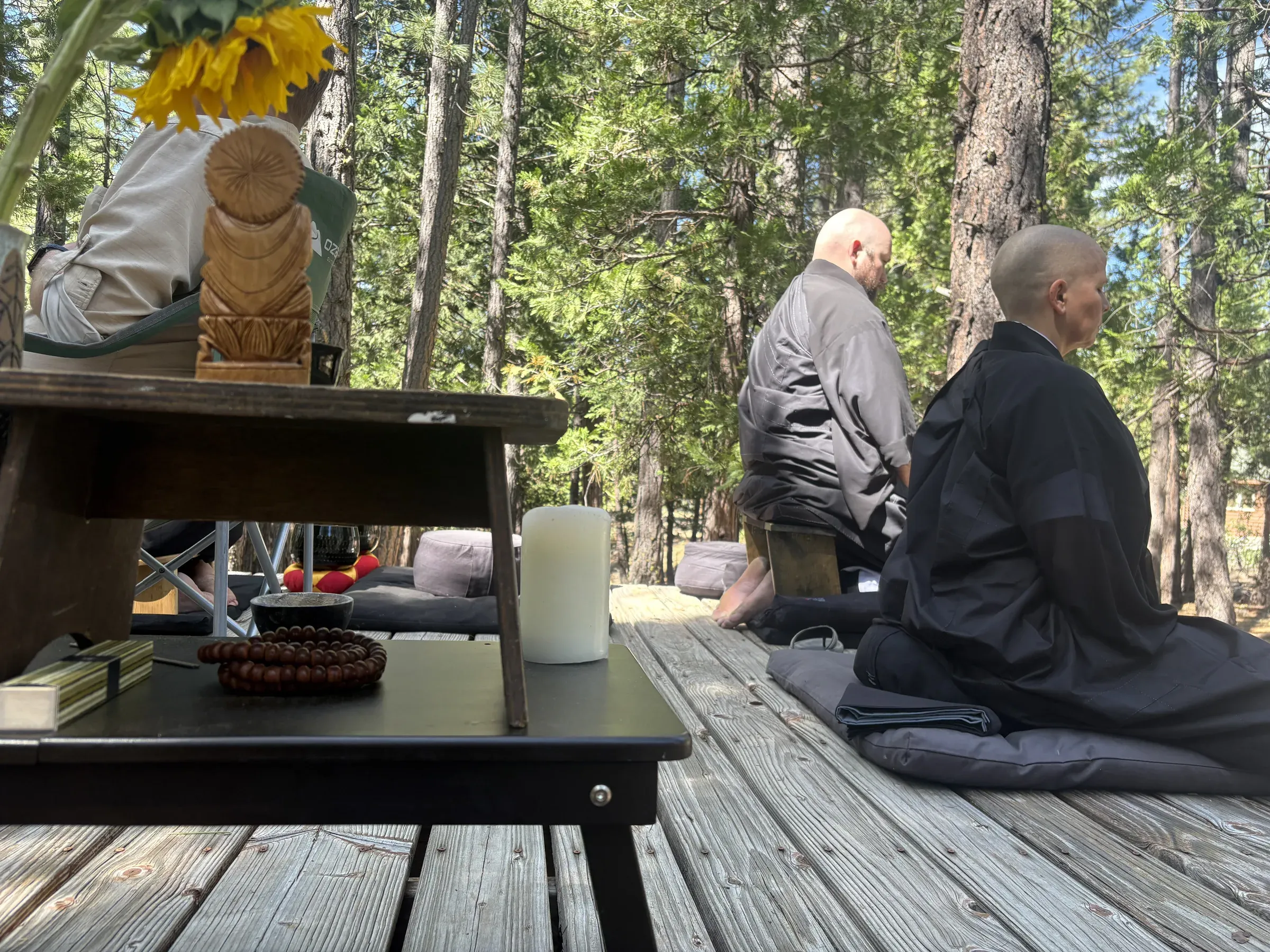

Spring practice period · Ango
A season of steady practice in the life already here
Ango means “peaceful dwelling” or “peaceful abiding.” In the traditional monastery it is a concentrated season of common training. At Facing the Mountain, it is a way for householders, working people, parents, caregivers, and formal trainees to deepen practice without pretending that ordinary life has disappeared.
The form is flexible, but it is not vague. Each participant makes a realistic commitment, practices it steadily, and lets work, family, relationships, illness, service, and the unexpected become part of the training place. Spring practice opens toward movement, landscape, service, and the renewed energy of the season.
Lay practice · complete practice
Ango is not an attempt to imitate a monastery badly. It asks what concentrated, wholehearted training looks like when the temple kitchen is also the family kitchen and the work period may happen at an office, a classroom, a sickbed, or a trail.
01
Commitments are shaped around the body, household, livelihood, and responsibilities actually present—not an imagined life with no demands.
02
We enter together, sign the same scroll, sit together when we can, and support one another through practice discussion and community.
03
The approach is gentle, but gentle does not mean casual. We choose carefully, continue steadily, and meet difficulty without turning the period into either punishment or make-believe.
Ango is something of a choose-your-own-practice period, but it is not a collection of disconnected wellness goals. Most participants build a simple, coherent plan from the following elements.
More is not automatically better. A small commitment carried every day can be more demanding—and more transformative—than an impressive plan abandoned after a week.
01
Increase daily zazen—even by five minutes—or establish a consistent sitting practice if daily sitting is not yet part of your life. Choose something modest enough to sustain and real enough to matter.
02
Set aside a habit, comfort, purchase, food, entertainment, or distraction for the period. This is not punishment or a purity test. It creates room to notice attachment and use attention more deliberately.
03
Arrange dokusan or another practice conversation with a teacher or practice leader several times during the period. Ango is supported by being known, questioned, and encouraged—not only by solitary effort.
04
Join Tuesday zazenkai and other in-person or online sangha events as fully as work, health, family, and distance reasonably allow. Shared practice gives the period its shape.
05
Deepen study, community service, work practice, or body practice such as walking, hiking, movement, or singing. The point is not to collect activities, but to let practice enter another part of life.
01
Participants describe the practices they intend to carry through the period. The plan belongs to the person making it, but stating it clearly makes the commitment visible and shareable.
02
We mark the practice period with a formal participant scroll. Signing it is a simple public acknowledgment that we are entering this season together.
03
No one keeps a private ledger of cushion time. When circumstances change, the practice is to respond honestly: seek guidance, adjust what truly must change, and continue rather than quietly disappearing.
The scroll is an invitation, not a finish line.
We prefer to begin together, but people are welcome to enter after the opening. What matters is not having caught the first date; it is making a sincere commitment to the time that remains.
Spring Ango is a time to loosen the habits of winter without losing the steadiness of practice. The annual theme and readings change, but the direction is consistent: deepen zazen, bring the body outdoors, serve where help is needed, and allow practice to become visible in ordinary activity.
Depending on the year, the sangha may offer additional morning sitting on Zoom, a shared text or sutra, practice discussions, community service, outdoor movement, and half-day sitting. The detailed schedule belongs in the community, where it can be adjusted without leaving stale information on the public page.
The period closes, as closely as weather and calendars allow, with a one-day Tree-Gazing retreat: sitting, walking, and practicing with the mountains, forest, and open sky as part of the zendo.
Participating
No. A beginner may use Ango to establish a first dependable daily practice, while someone with years of experience may take on a more complete schedule. The commitment should meet the life and practice that are actually present.
Ango is not a standardized challenge or a contest in intensity. Participants build a coherent commitment from the common elements above, with attention to health, caregiving, work, and family responsibilities. Sincerity and consistency matter more than raw quantity.
Yes. Beginning with the sangha is helpful, but the calendar should not become a gate. Late participants are welcome to make a clear commitment, sign the scroll, and enter the remaining weeks wholeheartedly.
Speak with a practice leader. Illness, disability, family needs, and changing responsibilities sometimes require a different form. Accommodation is part of serious practice; drifting away without examining what happened is something different.
They participate in the same public practice period, but formal trainees generally undertake a fuller commitment and additional accountability with their teacher or training group. Those details are handled privately rather than published as requirements for everyone.
A shared season of practice
The annual theme, readings, optional sitting schedule, and participant commitment thread are posted in the Facing the Mountain Community. You may also contact a practice leader to talk through a realistic way to participate.